Home / Gates, railings & more / Barriers and bollards
Gates, railings & more
Barriers and bollards
Barriers and bollards are the simplest metalwork we make, and the kind most often fitted badly. A bollard that leans after one knock, or a guardrail bolted into soft tarmac, is no use to anyone. We make stainless and galvanised steel bollards, posts and pedestrian barriers at Westerham Hill and fit them across Kent, Surrey and South London.
Stainless steel bollards and steel posts
Stainless steel bollards are the usual choice outside offices, shops and blocks of flats, where the metalwork is on show. We make them in 76mm, 101mm and 114mm tube, 900mm to 1000mm above ground, with a domed or flat cap and a brushed or polished finish. Grade 304 is fine for most sites. Go to 316 beside a salted road, on a gritted car park or anywhere de-icer is used, or the surface will tea-stain. Mild steel bollards and posts cost less and take a colour: hot-dip galvanised, then powder coated in any RAL shade, black and dark grey being the usual ones. Steel posts for signs, lighting, height bars and gate stops are made the same way, in the tube size the load needs rather than the lightest one on the shelf.
Fixed, removable and telescopic bollards
How a bollard is fixed matters more than what it is made of. A root-fixed bollard has 400mm to 500mm of tube below ground, set in a concrete plug, and is the only fixing that will take a knock from a car and stay upright. Base-plated bollards bolt down with resin anchors into sound concrete. They are quicker and can be moved later, but they are only as strong as the slab, and we will not bolt one to tarmac or block paving. Removable bollards drop into a ground socket and lock with a padlock or a hex key, so a driveway, a fire route or a delivery bay can be opened when needed. Telescopic bollards sink into their own sleeve, flush with the ground. Both need a drained socket, or they fill with water and seize.
Anti-ram bollards and vehicle protection
An anti-ram bollard is a much heavier job: 168mm or 219mm thick-wall tube, filled with concrete, with a deep root tied into a reinforced foundation and often a second tube inside the first. Set at 1200mm to 1400mm centres, they are what most shop fronts, cash machines and loading yards need to keep a car or a van out. A crash-rated barrier to PAS 68 or IWA 14 is something else again: a tested system, bollard and foundation together, and if your insurer or a planning condition asks for that rating you need a certified product, not a heavy bollard. We will tell you which you need. For the rest, we fabricate and fit heavy-duty bollards and draw the foundation where the council or the insurer wants to see it.
Pedestrian barriers, guardrail and hoop barriers
Pedestrian guardrail is the tubular barrier you see along a school gate, a bus stop or the edge of a loading bay: 48mm or 60mm tube with infill bars, 1000mm to 1100mm high, root-fixed or on base plates. BS 7818 is the standard for it, and the one a highways engineer or a school will ask for. Hoop barriers are the simpler one-piece version for keeping trolleys and cars off a footway or protecting the corner of a building. We also make trolley bays, cycle stands, knee rails for car park edges and height restriction bars for car park entrances. All of it is mild steel, hot-dip galvanised, with powder coating on top where you want a colour, and the joints are welded in the workshop rather than clamped together on site.
Spacing, height and access rules
Bollards on a public route have rules. Approved Document M and BS 8300 want them at least 1000mm high, in a colour that contrasts with the paving, and never linked by chains or ropes that a white cane will miss. The clear gap between them should be at least 1000mm, and 1200mm is better, so a wheelchair or a double buggy gets through while a car does not. Where bollards protect a pedestrian walkway in a car park the same spacing applies. We set out the run on the survey so the gaps are even and the ends land where they should, rather than leaving a half-gap at a wall. If the run needs to stop a vehicle and still let a fire engine in, one removable bollard with a fire brigade padlock is the usual answer.
Estimates, surveys and price
For a simple run, a photo of the spot and a rough count is enough for a written estimate within the working day. The free survey checks what the bollards are going into, because that decides everything: the depth of concrete, whether there is a slab under the paving, what services run underneath, and whether a base plate is safe or a root fixing is the only option that will hold. Price comes down to the material, stainless costing more than coated steel, the size of tube, the fixing type and the number. The quotation is fixed unless the design changes. A run of standard galvanised bollards is one of the quickest jobs we do, as the tube is stock and the finish is simple. Stainless and anti-ram work takes longer, as the fabrication and groundwork are heavier.
Straight answers on barriers and bollards
Do you do polyurethane bollards?
Yes. They are a polyurethane sleeve cast round a steel core, so they shrug off scrapes from cars and trolleys and never need painting. They suit car parks, delivery yards and perimeter security runs where bollards get clipped every week. We fit them rather than make them, and the steel core is root-fixed like any other bollard.
How deep does a bollard go into the ground?
A root-fixed bollard has 400mm to 500mm of tube below ground in a concrete plug, and more where the ground is soft or made up. An anti-ram bollard goes deeper, into a reinforced base sized for the job. A base-plated bollard sits on the surface and bolts into sound concrete with resin anchors, which is fine for marking a line but not for stopping a vehicle.
Can bollards go into block paving or tarmac?
Yes, but only root-fixed. We lift the blocks or cut the tarmac, dig and concrete the root, then relay the blocks or make good the surface around the post. A base plate bolted to either surface works loose, because there is nothing solid for the anchors to bite into.
Can I have bollards that unlock so I can drive through?
Yes. Removable bollards lift out of a ground socket with a padlock or a hex key; telescopic ones drop into their own sleeve flush with the ground. Both need a drained socket, which we build in, or they fill with water and seize. On a fire route, fit a fire brigade padlock so the crew can open it without you.
Do bollards need planning permission?
Usually not on private land. On a public footway or the highway you need the council's permission before anything goes in the ground. Within the curtilage of a listed building or in a conservation area the planners may have a view on the style, so ask before you order. We will tell you what applies at the survey.
Stainless or galvanised steel?
Stainless looks better where it is on show and never needs painting, but it costs more and will tea-stain beside a salted road unless you go to grade 316. Galvanised and powder coated mild steel is cheaper, comes in any colour and lasts well unless the coating is damaged. Both are fine structurally; the choice is about looks, budget and how much salt it will see.
Recent work
Related metalwork from the same workshop
Also in Gates, railings & more
Related work
Metal gates
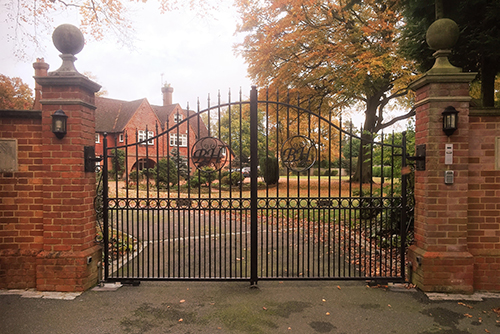
Driveway, side, pedestrian and estate gates in galvanised steel, made to your opening, automation-ready.
See the page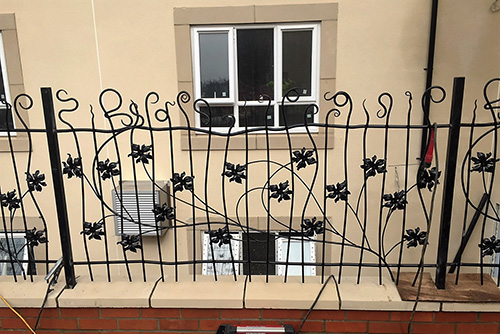
Metal railings
Garden, wall-top, step and ramp railings in period or plain styles, galvanised and powder coated.
See the page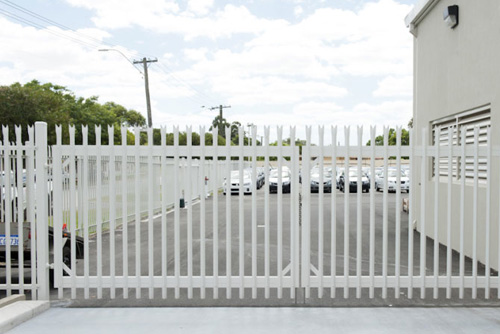
Palisade fencing
Metal palisade fencing and matching gates for yards, schools and commercial boundaries, galvanised or powder coated.
See the pageFree quote
A photo, a rough height and a few words. Priced today.
Attach a phone photo of the spot, or a drawing, tell us roughly how high, and we ring back the same working day with a figure. Architects and builders can attach a PDF or email a tender package instead. Once you like the figure we survey free of charge, anywhere within reach of Westerham Hill.