Home / How we work / Welding services
How we work
Welding services
Every staircase, balcony, gate and balustrade we make starts as lengths of steel on the bench at Westerham. Welding is what turns those lengths into something you can put your weight on. Most of it is done in the workshop, some of it on site, and how the joints are made decides how the job looks and how long it lasts.
What we weld
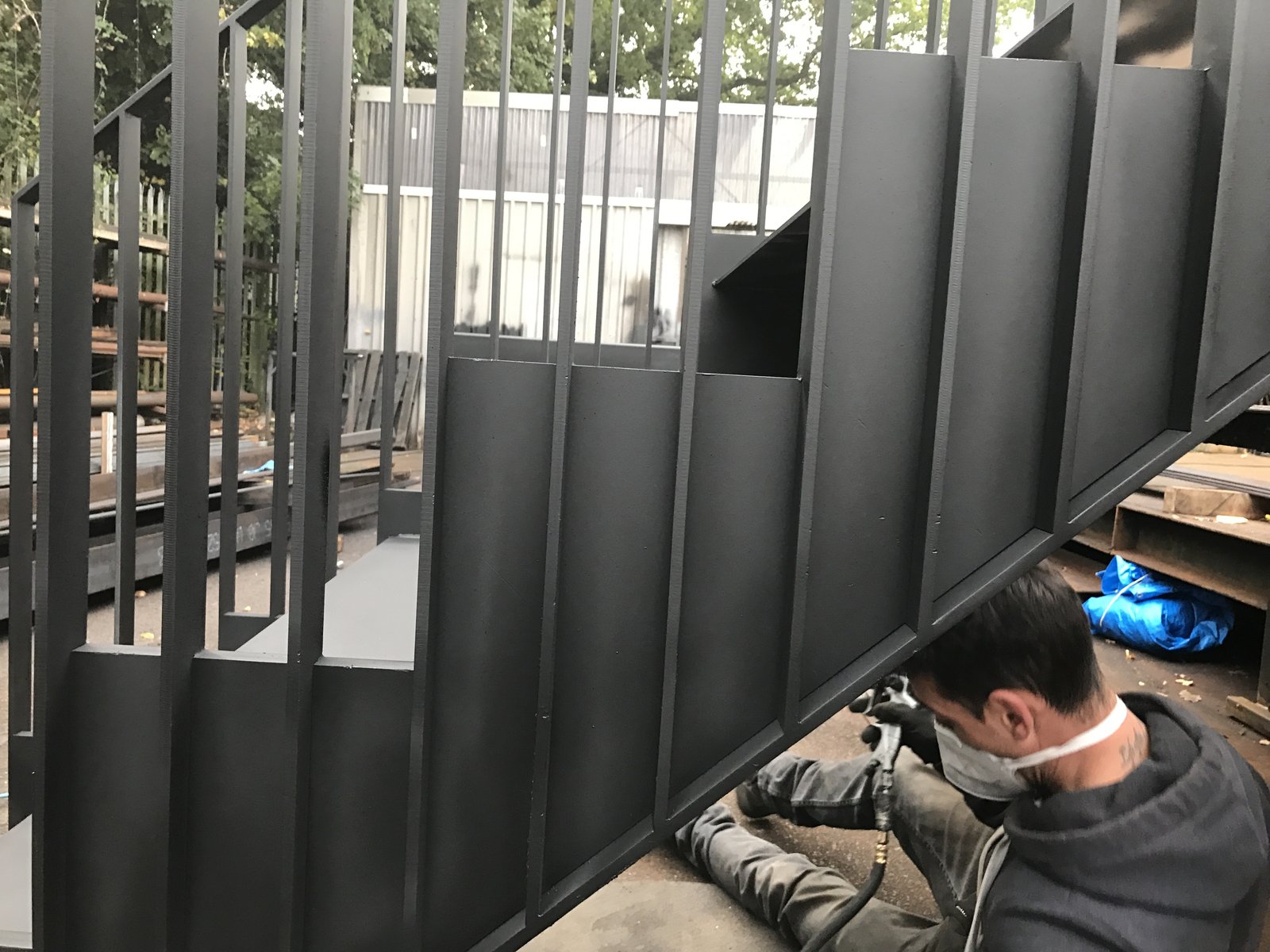
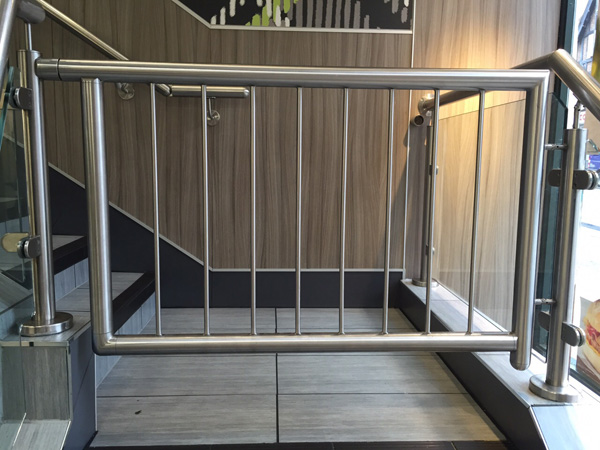
Most of our welding is mild steel: flat bar, box section, angle, channel and tube, from 3mm up to the 10mm plate in a staircase stringer or a balcony bracket. That covers staircases, balconies, gates, railings and balustrades, plus the posts and beams that hold them up. Stainless is the other regular. We use it for handrails, glass clamps and balustrades where you want the metal left bare, and for anything near a swimming pool or the coast, where even galvanised mild steel weathers faster. Sheet metal comes into it for treads, risers, cladding and gate infill panels. Glass is not welded, but it is clamped or channelled into the steel we make, so it is designed in from the first drawing.
MIG, TIG and stick: which we use where
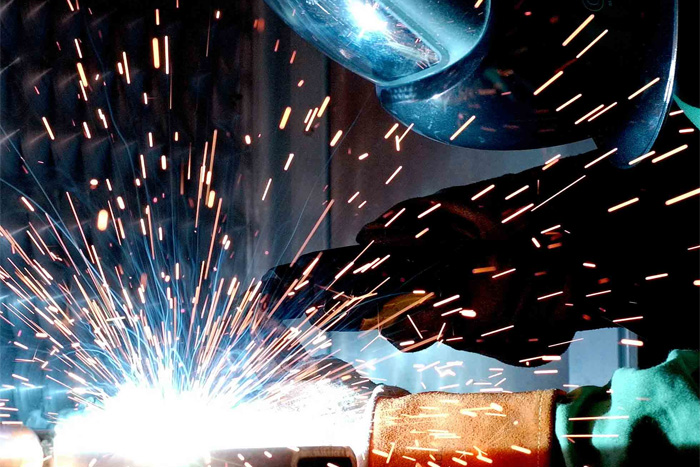
MIG is the workhorse for mild steel. It is quick, it fills well from thin sheet to 10mm plate, and a clean MIG fillet, dressed where it shows, is what you see on most of our stringers, gate frames and balcony brackets. TIG is slower and cleaner. We use it on stainless, on sheet that would blow through under MIG, and on joints that stay in view, such as a handrail return or the mitre on a stainless post cap. Stick welding is what we take on site: it does not mind a breeze, and it will run on heavy sections when we are tying a flight into an existing beam. Whatever the process, mill scale and rust are ground off first, and butt joints in anything over 6mm are bevelled so the weld reaches full depth.
Welding with galvanising in mind
Anything going outside is hot-dip galvanised as standard, which changes how it is welded. The steel goes into molten zinc at around 450 degrees. A sealed box section or tube traps air, and trapped air at that temperature can split a weld or burst the section, so every hollow member gets vent and drain holes, placed where they will not show or hold water. Weld spatter and slag leave bare spots under the zinc, and a high-silicon wire makes the coating come out thick and dull grey, so joints are cleaned back in the workshop and we pick the wire to suit. Overlapping plates are welded all round so acid from the pre-treatment cannot sit in the gap and bleed out later. If you want a colour, the galvanised steel is then powder coated.
Welding on site
We bolt where we can and weld where we must. Bolting a galvanised flight to its landing and base plate keeps the zinc intact, so our drawings split long runs into pieces we can carry through a house and bolt together on the spot. The free survey settles which joints are which before anything is drawn. Some things still need a live arc on site: tying a new balcony into an existing steel beam, extending a run of railings, or fixing a handrail bracket to an old post that is staying put. When that happens we screen the area, keep an extinguisher within reach, protect glass and paving, and treat the weld with zinc-rich paint before we leave. Timber floors, gas pipes and the neighbours' cars all get looked at before anything gets hot.
Structural steelwork and the regulations that apply
A staircase or balcony is structure, not decoration, and the welding has to be sized for the loads. Guarding on a domestic balcony has to resist 0.74 kN per metre along the top rail under BS 6180, and a stair balustrade inside a private house 0.36 kN per metre; commercial and public jobs go higher. Approved Document K sets the rise, going, headroom and guarding heights. Approved Document B applies to escape stairs, and it can change the tread type, the landing size and the material. Where building control wants to see the numbers, we produce the drawings and structural calculations. Those calculations give the weld throat and length on each joint, so a 6mm continuous fillet where a tread meets a stringer is a figure from a sheet, not a guess.
What sets the price and the lead time
Welding is priced by time on the bench, and time follows the number of joints more than the weight of steel. A framed gate with a few braces has a couple of dozen welds; a balustrade with vertical bars at gaps under 100mm has hundreds. Stainless takes longer than mild steel because it is TIG welded and polished. Joints dressed flush cost more than joints left as welded. Galvanising and powder coating each add a trip to the plant and the plant's own turnaround, so a coloured external staircase takes longer than an internal one. The quotation gives a rough timescale for workshop, finishing and fitting, and the price is fixed unless the design changes. A written estimate from your photos arrives within the working day, and the phones are answered from 6am to 10pm, seven days a week.
Straight answers on welding services
Do you weld stainless steel?
Yes. Handrails, glass balustrade posts and anything that stays bare outside are TIG welded in 304 or 316 stainless, then polished or brushed to match the rest of the run. 316 is the grade to specify near the sea or a swimming pool; it costs more than 304, so we only suggest it where it is needed.
Can you weld on site?
Yes. Mobile welding is part of fitting for us: tying a balcony into existing steel, extending a run of railings, or adding a bracket where there is nothing to bolt to. We bolt galvanised sections together wherever we can so the zinc stays whole, and any site weld is cleaned back and treated with zinc-rich paint before we leave.
Will the welds rust?
Not if the finish is right. Outside work is hot-dip galvanised as standard, with powder coating on top if you want a colour, and stainless is left bare or brushed. Internal steel can be powder coated too. A cleaned and coated weld is no more likely to rust than the steel around it; the risk is a site weld left bare, which is why ours are painted the same day.
Do I need drawings before you can quote?
No. Send photos of the spot and a couple of measurements and you will have a written estimate within the working day. We measure and draw the job ourselves after the free site survey, and we produce structural calculations if building control asks for them. If you already have an architect's drawing, send that and the estimate will be closer to the final figure.
Which areas do you cover?
Kent, Surrey and South London from the workshop at Westerham Hill, and routinely everything within forty miles of Warlingham: Biggin Hill, Bromley, Keston, Orpington, Croydon, Caterham, Oxted, Sevenoaks and the villages between.
Recent work
Recent work from the workshop
Also in How we work
Related work
Steel fabricators
Steel fabricators on Westerham Hill: surveyed, drawn, made, galvanised and fitted by one team.
See the page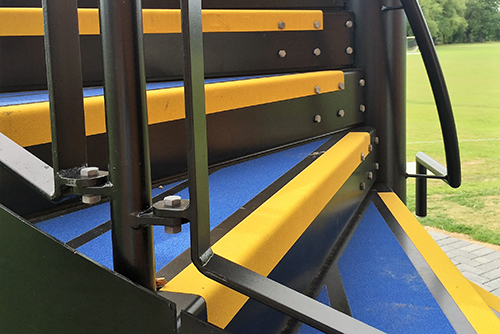
Installations
Our own fitters install the stairs, balconies and gates we make across Kent and Surrey.
See the page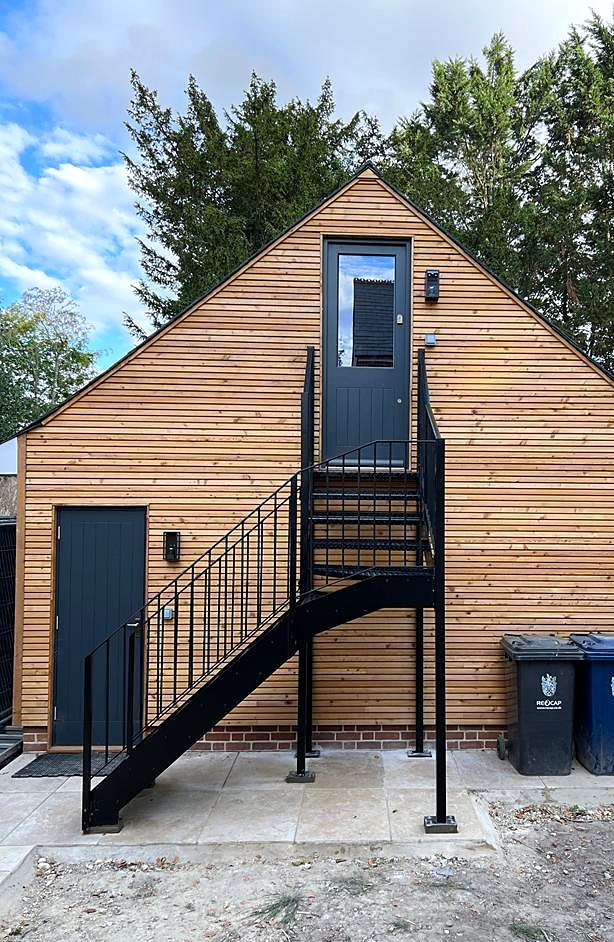
Site surveys
Free site survey before a fixed price: levels, fixings, access and regulations checked by the fitter.
See the pageFree quote
A photo, a rough height and a few words. Priced today.
Attach a phone photo of the spot, or a drawing, tell us roughly how high, and we ring back the same working day with a figure. Architects and builders can attach a PDF or email a tender package instead. Once you like the figure we survey free of charge, anywhere within reach of Westerham Hill.