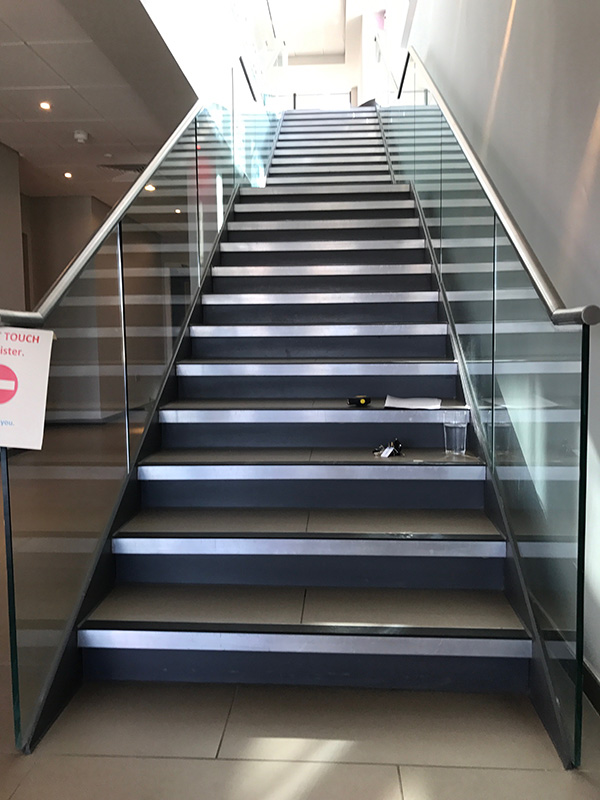
Home / Staircases / Commercial staircases
Staircases
Commercial staircases in steel
A commercial staircase is used by staff, customers or residents every day, and often has to double as an escape route, so the rules are tighter than for a stair in a house. We design, fabricate and install commercial steel staircases for offices, shops, blocks of flats, warehouses and mezzanine floors across Kent, Surrey and South London, with the drawings and structural calculations Building Control needs.
Where commercial stairs are used
Most commercial work falls into a few kinds of job. Offices and shops want a main stair between floors that looks good and stands up to heavy use. Blocks of flats need common stairs, access stairs to upper flats and replacements for worn-out concrete or timber flights. Warehouses and industrial units need stairs to mezzanine floors, plant rooms and loading platforms, where strength and grip matter more than looks.
Then there are escape routes. An external fire escape staircase is its own subject, but a lot of internal commercial stairs are part of the escape route too, and that shapes the width, the landings and the doors.
Building Regulations: Part K, Part B and Part M
Approved Document K sets the geometry. A general access stair in a building used by the public, such as an office or a shop, needs a rise of 150 to 170mm and a going of 280 to 425mm, and no more than 12 risers in a flight before a landing. A utility stair used only by staff, such as one to a plant room, can be steeper. Handrails go on both sides of a stair a metre or more wide, and guarding around landings and open edges is 1,100mm high. Step nosings need to contrast with the rest of the tread so they can be seen.
Approved Document B decides whether the stair is an escape route, how wide it has to be for the number of people using it, and whether it needs to be enclosed. Approved Document M adds requirements so that ambulant disabled people can use the stair safely. Your architect, fire engineer or Building Control officer will normally set these out, and we design the steel to suit.
BS 5395, loads and guarding
BS 5395-1 is the code of practice for the design of straight stairs, and BS 5395-2 covers spiral and helical stairs, with categories for private, semi-public and public use. BS 6180 sets the load the guarding has to take, which goes up sharply in shops, offices and places where crowds gather, compared with a house.
That is why commercial stairs are heavier than domestic ones: deeper stringers, stiffer landings, stronger balustrade posts and fixings, and structural calculations as standard. For the balustrade itself, bar infill, perforated panel and glass are all common; our balustrading page explains each.
Treads, finishes and hard wear
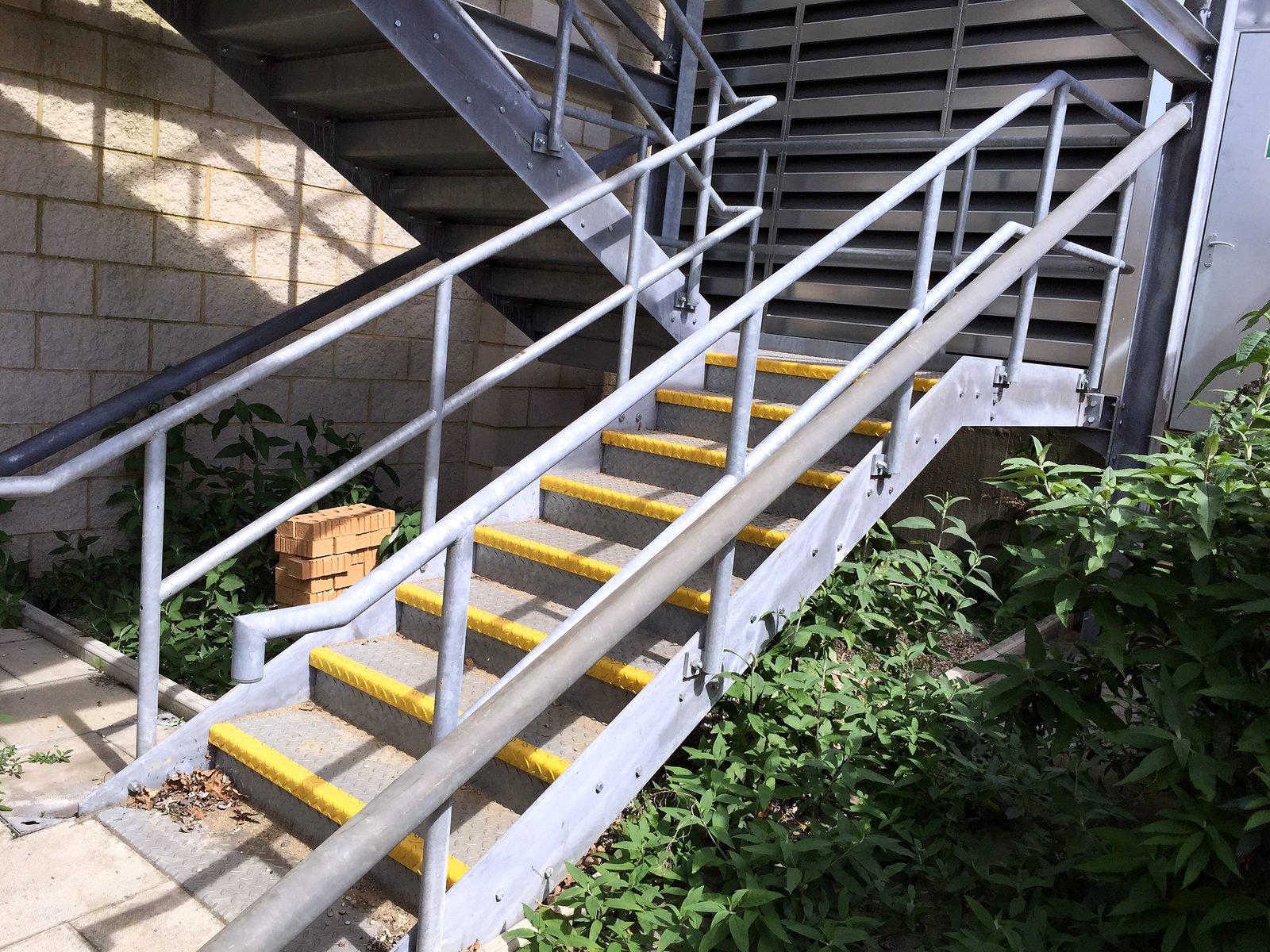
Inside, steel pan treads take a concrete, stone, carpet or vinyl infill so the stair matches the floor finishes, with contrasting anti-slip nosings. In warehouses, plant rooms and outside, open steel grating or chequer plate gives grip and lets water and dirt through.
External commercial steel staircases are hot-dip galvanised to BS EN ISO 1461 so the zinc protects every weld and edge, and powder coated over the galvanising where colour is wanted. Inside, stairs are powder coated or primed and painted on site. Mild steel does most jobs; stainless suits a feature stair or a coastal site.
Working on occupied buildings
Commercial stairs often go into buildings that are open for business, or replace a stair people still rely on. The stair is built at the workshop in bolt-together sections small enough to come through the building, and we plan the fitting with you so the old route is out of use for as short a time as we can manage.
We work from an architect's or engineer's package, or draw the stair ourselves from the survey. Send drawings or photos and you will have a written estimate within the working day, followed by a free survey and a fixed quotation. We also make straight, dog-leg and multi-flight steel stairs, spiral staircases and external access stairs for commercial buildings.
Straight answers on commercial staircases
Which regulations apply to a commercial staircase?
Approved Document K for the rise, going, handrails and guarding, Approved Document B where the stair is part of an escape route, and Approved Document M for use by ambulant disabled people. BS 5395 and BS 6180 sit behind them for design and guarding loads. We supply drawings and calculations for Building Control.
Does a commercial stair need handrails on both sides?
Yes where the stair is a metre wide or more, which most commercial stairs are. Very wide stairs may also need a central handrail. Guarding around landings and open edges is 1,100mm high.
Can you make a stair to a mezzanine floor?
Yes. Mezzanine stairs in warehouses, shops and offices are a common job, usually with grating or pan treads, handrails both sides and guarding along the mezzanine edge to match.
Can a commercial staircase also be the fire escape?
Often it is. If the stair forms part of the escape route, Approved Document B sets its width, landings and protection, and a stair outside the building has to be designed as an external escape stair. Tell us at the start and we design to suit.
Recent work
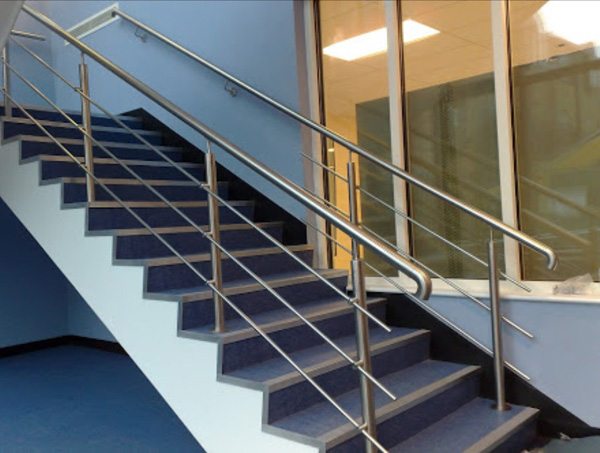
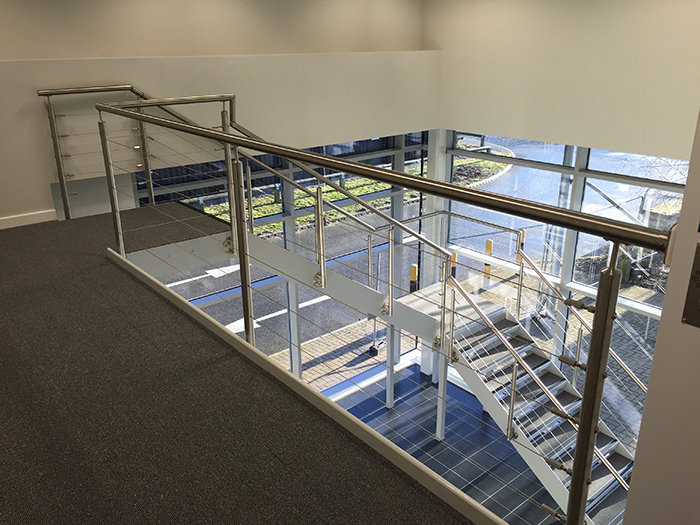
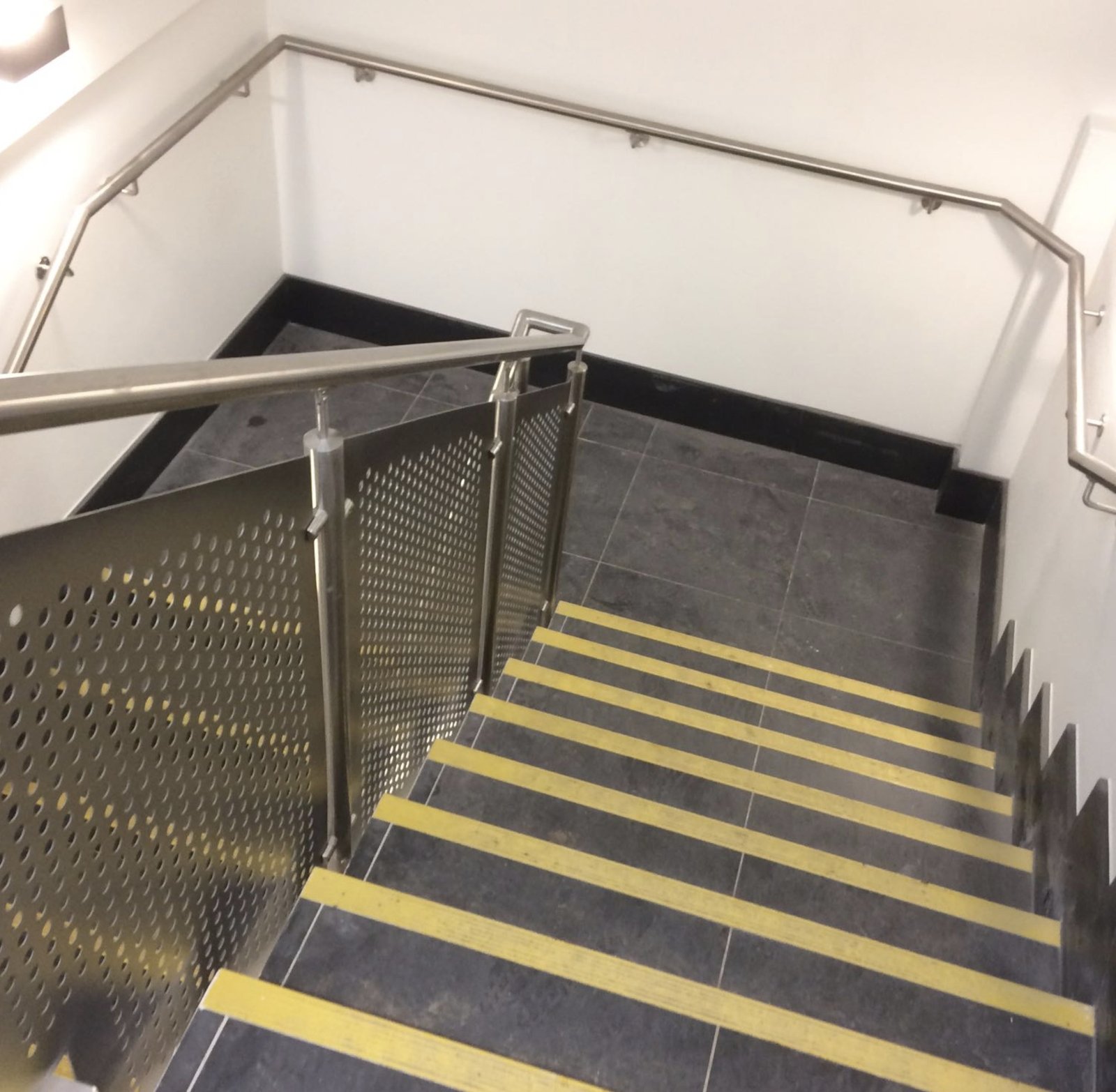
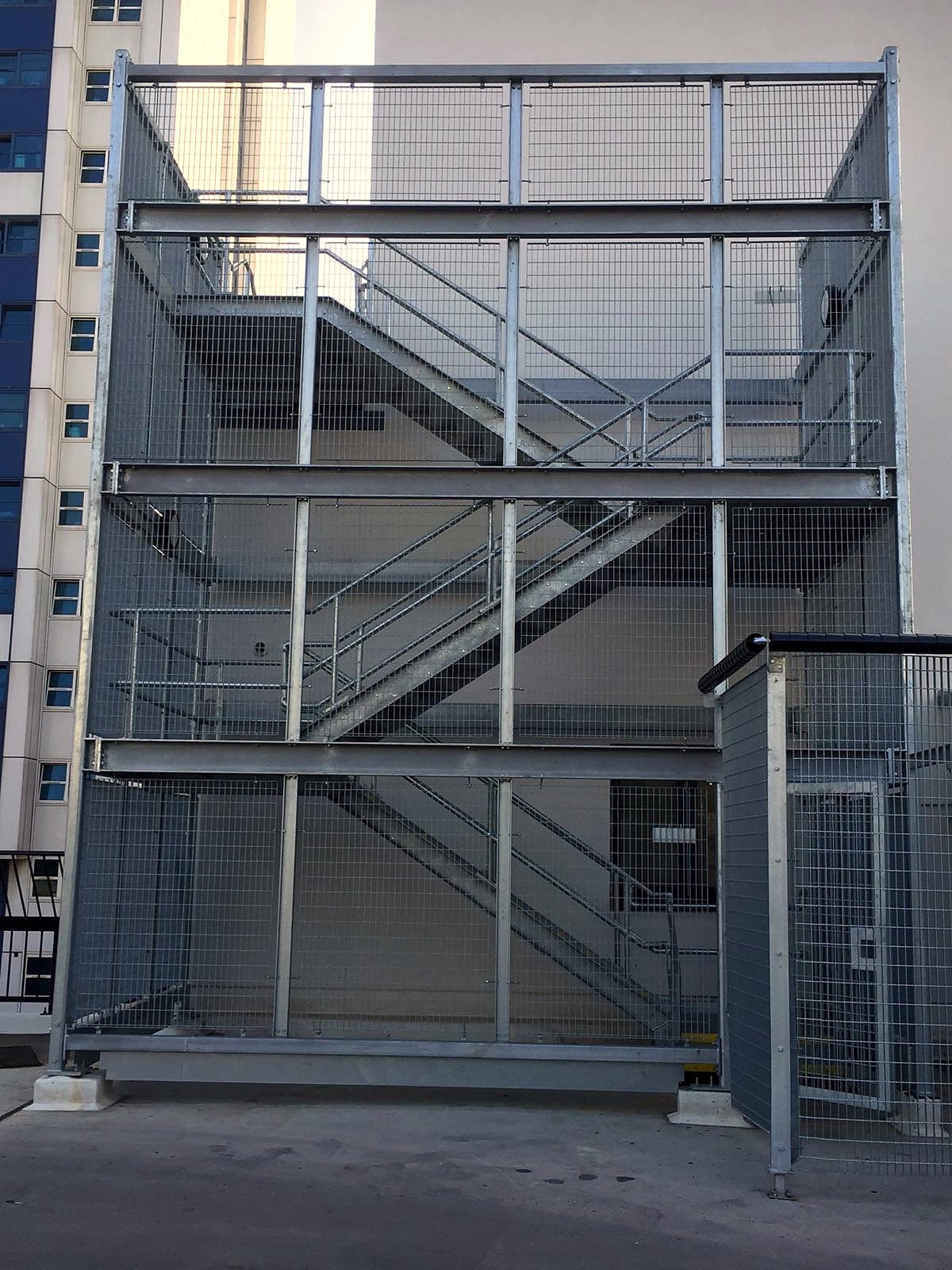
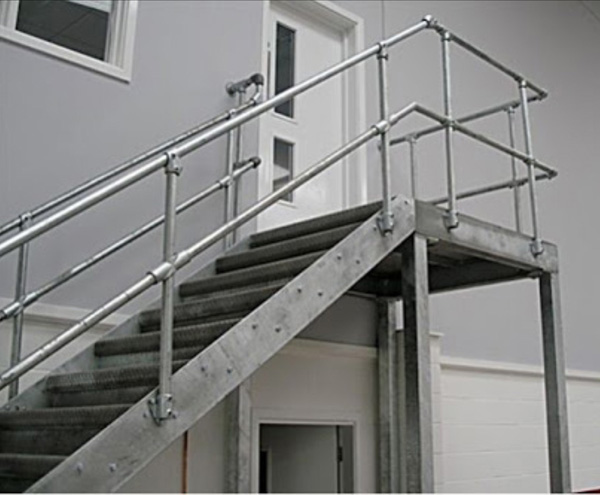
Stairs for offices, flats and industrial units
Also in Staircases
Related work
Outdoor staircases
Outdoor steel staircases for decking, sloping gardens and roof terraces, drawn, made and fitted.
See the page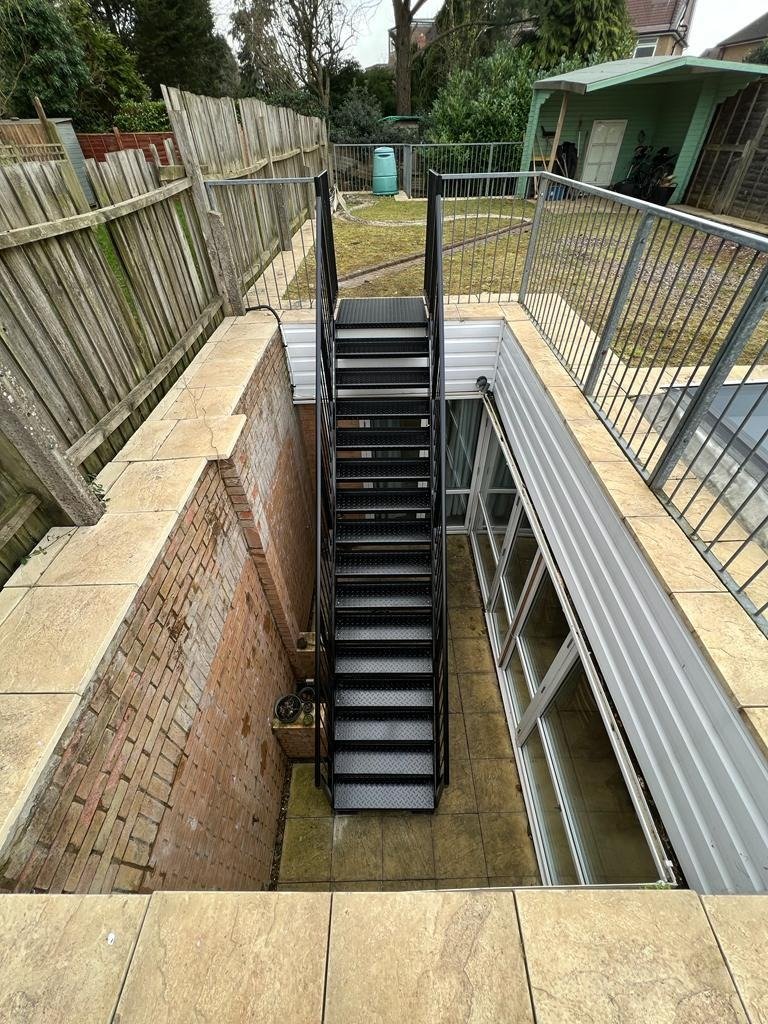
Garden staircases
Steel garden steps for slopes, lightwells and balcony access, galvanised to last outside.
See the page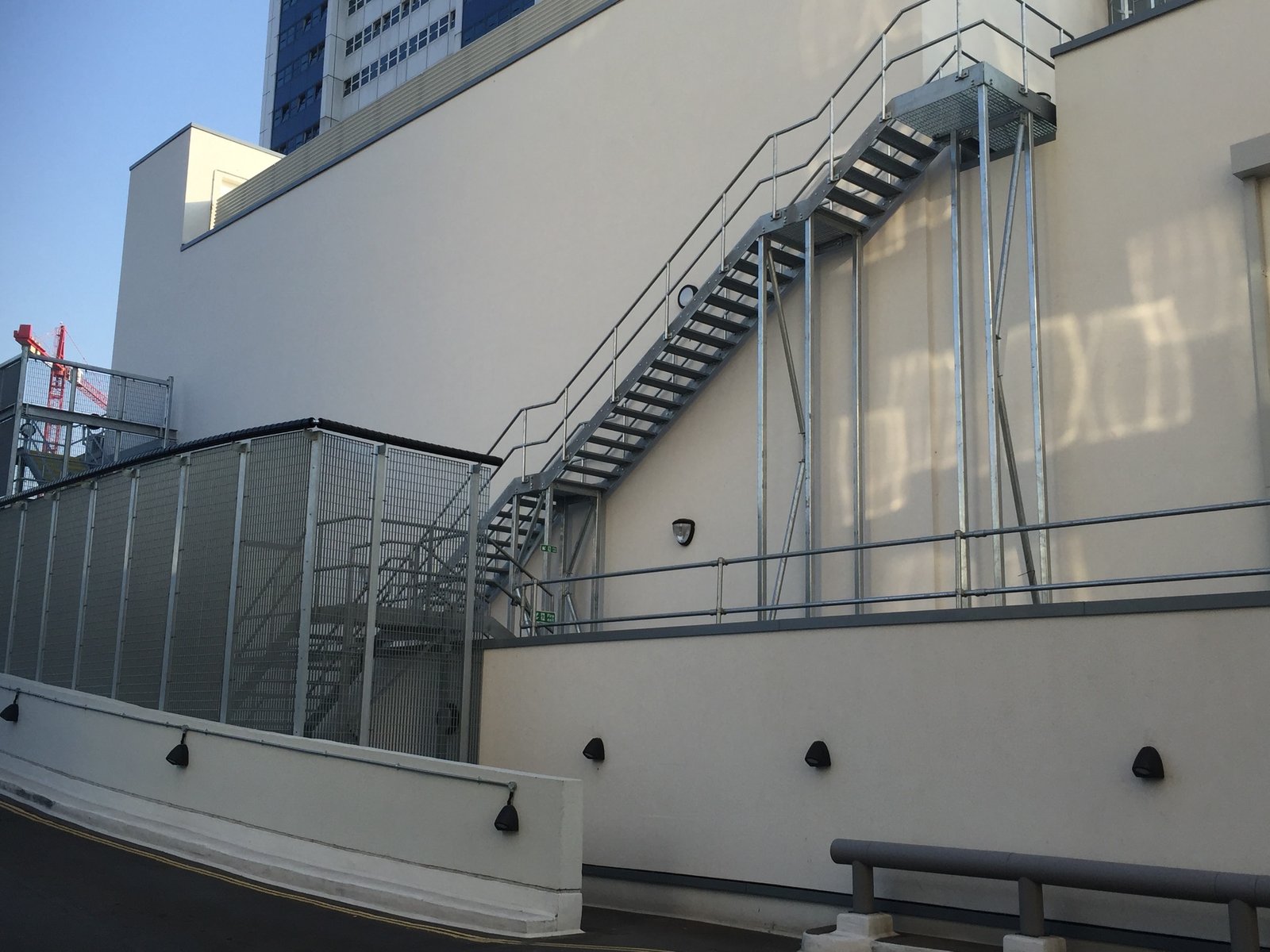
Fire escape staircases
External steel fire escape stairs for blocks of flats, offices and shops, with drawings for Building Control.
See the pageFree quote
A photo, a rough height and a few words. Priced today.
Attach a phone photo of the spot, or a drawing, tell us roughly how high, and we ring back the same working day with a figure. Architects and builders can attach a PDF or email a tender package instead. Once you like the figure we survey free of charge, anywhere within reach of Westerham Hill.